

It’s July. The sunscreen bottle is empty, the beach towels are permanently damp, and your child has somehow spent more time underwater than above it.
Then it happens.
On the drive home from the beach, a small voice from the back seat says: “My ear hurts.”
At first, you assume it’s a typical ear infection. After all, kids get those all the time.
But then your child winces when you help them dry off. They don’t want you touching their ear. Pulling on it hurts. Sleeping is difficult. Suddenly, you’re wondering if this is something different.
It might be swimmer’s ear.
And during the summer months, it’s one of the most common conditions we see at KidMed.
What Exactly Is Swimmer’s Ear?
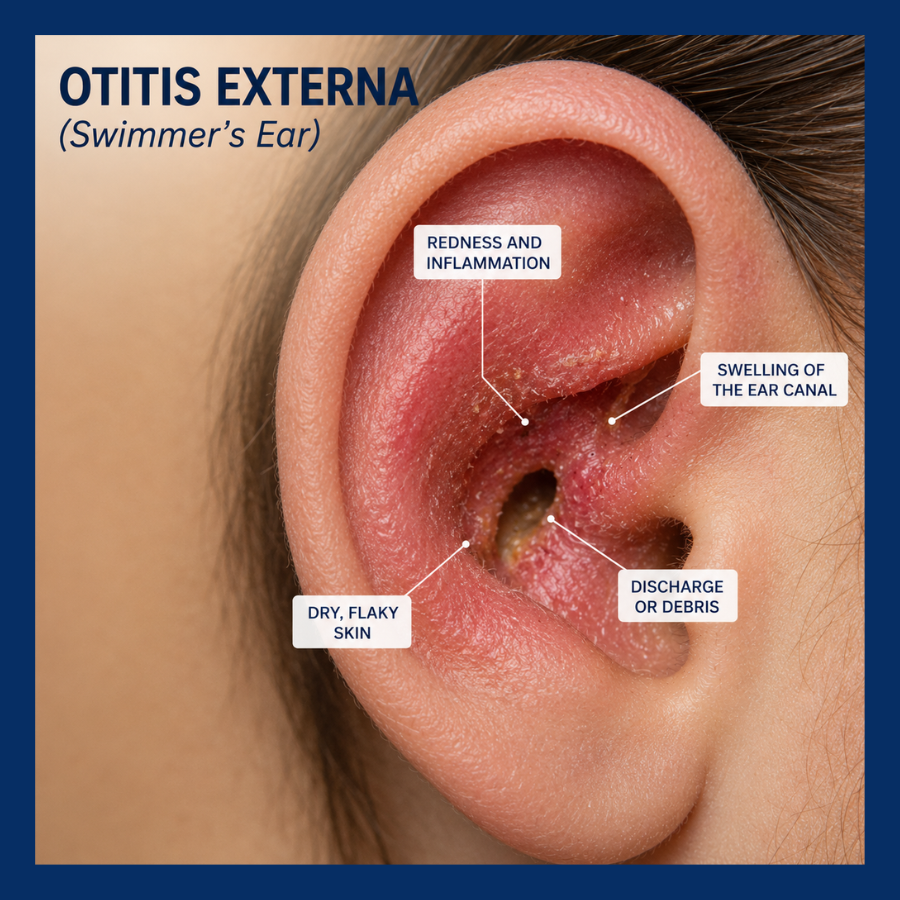
Swimmer’s ear, known medically as otitis externa, is an infection or inflammation of the ear canal—the passage that runs from the outside of the ear to the eardrum.
According to the Centers for Disease Control and Prevention, swimmer’s ear can develop when water remains trapped in the ear canal, creating an environment where bacteria can grow and thrive.
Despite the name, you don’t have to be an Olympic swimmer to get it. A few days at the pool, beach, splash pad, or summer camp can be enough.
In other words, if your child believes hydration means becoming one with the pool water, they’re in the target audience.
Not All Ear Infections Are Created Equal
One of the biggest misconceptions parents have is that every ear infection is the same.
Traditional ear infections usually occur behind the eardrum, often after a cold, allergies, or another upper respiratory illness.
Swimmer’s ear occurs in the ear canal itself.
The difference matters because the symptoms—and the treatment—are often completely different.
Signs of Swimmer’s Ear
Your child may have:
- Ear pain that worsens when the ear is touched
- Pain when chewing
- Itching in the ear canal
- A feeling that the ear is “plugged”
- Drainage from the ear
- Mild hearing difficulty
One clue we see frequently in the clinic is pain when the outer ear is gently tugged.
Children with swimmer’s ear often react immediately.
Children with a middle ear infection usually do not.
Why Are We Seeing So Much of It?
According to the CDC, swimmer’s ear is responsible for millions of healthcare visits and affects people of all ages, with children and frequent swimmers at particularly high risk.

The summer months create the perfect storm:
- More swimming
- More humidity
- More water trapped in the ear canal
- More opportunities for bacteria to grow
Unfortunately, bacteria love warm, moist (awful word, we know 😇) environments almost as much as children love cannonballs.
How Is Swimmer’s Ear Treated?
The good news is that swimmer’s ear is usually very treatable.
Unlike many traditional ear infections, treatment often involves prescription ear drops rather than oral antibiotics.
Depending on the severity, treatment may include:
- Antibiotic ear drops
- Anti-inflammatory medication
- Keeping the ear dry during healing
- Pain control measures
Most children start feeling significantly better within a few days once treatment begins.
Can It Be Prevented?
Sometimes, yes.
A few simple habits can help reduce the risk:
✴ Dry ears thoroughly after swimming
✴ Tilt the head from side to side to remove trapped water
✴ Consider swim ear plugs for children who develop frequent swimmer’s ear
✴ Avoid inserting cotton swabs into the ear canal
This last one surprises many parents. Cotton swabs may feel helpful, but they can irritate the delicate skin lining the ear canal and actually increase the risk of infection.
When Should Parents Call?

You should contact us if your child has:
- Significant ear pain
- Ear drainage
- Fever
- Swelling around the ear
- Symptoms that continue to worsen
- Difficulty sleeping because of pain
The sooner swimmer’s ear is treated, the sooner your child can get back to doing what they do best during summer:
Ignoring your instructions and immediately jumping back into the water.
The KidMed Takeaway
Summer should be filled with beach days, pool parties, and family memories—not painful ears.
If your child develops ear pain after swimming, don’t assume it’s a routine ear infection. Swimmer’s ear is common, especially this time of year, and early treatment can make a big difference.
At KidMed, we’re here to help your family stay healthy all summer long—whether the problem starts in the pool, at the beach, or somewhere in between.