
It is the final week of August. The transition is complete, the physicals are turned in, the lunches are packed perfectly, and you are officially surviving the back-to-school season.
Then, 3:30 PM arrives.
You pull up to the pickup lane or meet your child at the bus stop. Their teacher smiles warmly and says, “Oh, they had an absolute wonderful day! A total angel! So helpful and polite!” You beam with pride. Your child buckles into their car seat, you hand them a snack, and you ask how their day was.
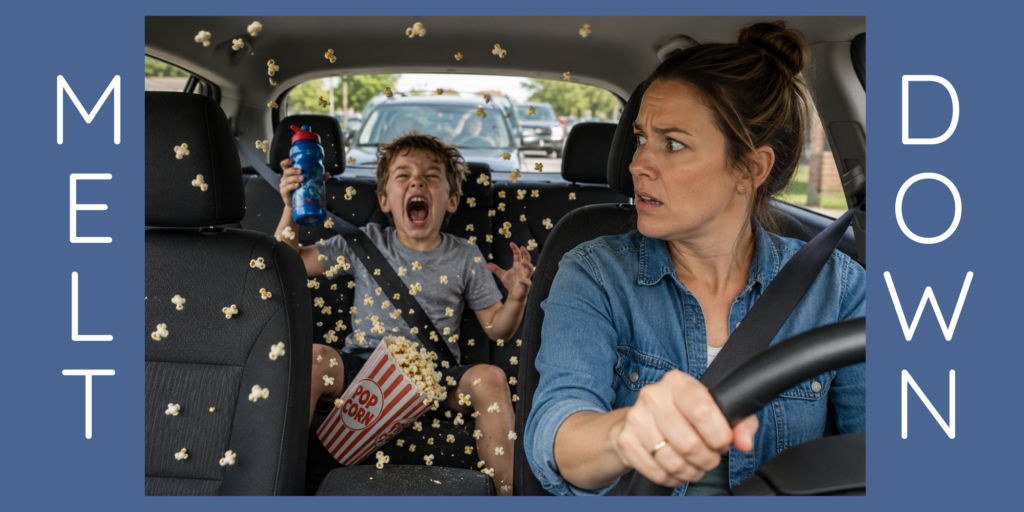
And then, the universe implodes.
Suddenly, your child is screaming, sobbing, or throwing a shoe across the minivan because you brought the blue water bottle instead of the green one. By the time you get home, they are slamming doors, melting down over homework, or flat-out refusing to look at you. You sit on your kitchen floor feeling completely defeated, wondering: What am I doing wrong? Why do they save their absolute worst behavior for me?
You want a peaceful, connected afternoon where your family can share stories about their day. Instead, you feel like you are walking on eggshells, bracing yourself for a daily late-afternoon emotional hurricane.
Take a deep breath, moms and dads. You are not doing anything wrong, and your child isn’t broken. In fact, their explosive behavior is actually a massive medical compliment.
Here is the neurological truth behind “After-School Restraint Collapse” and how to save your afternoons.
1. The Science of the Fried Nervous System

To understand the 3:30 PM meltdown, we have to look at the sheer amount of chemical and mental energy your child uses during a standard school day.
- The Behavioral Marathon: For seven straight hours, your child’s brain has to hold itself together. They are sitting still when they want to run, filtering out the constant sensory noise of 20- other kids, interpreting complex social cues, and managing their emotional reactions to rules and transitions.
- The Guide’s Authority: Pediatric and mental health experts note that this requires an immense amount of executive functioning and neurological restraint. By the time the final bell rings, your child’s internal “emotional tank” is completely, bone-dry empty. Their cortisol and adrenaline levels are spiking, and their nervous system is in a state of hyper-arousal.
2. The Safe Space Explosion
So, why do they save the screaming for you instead of the teacher? Because you are their ultimate safe space.
- The Compliment in the Chaos: In the classroom, your child cannot let their guard down because it doesn’t feel completely safe to do so. But the moment they see your face, buckle into your car, or step through your front door, their brain recognizes that they are back in their most secure environment.
- The Release: They finally have permission to drop the heavy emotional armor they’ve been wearing all day. The restraint collapses. All that pent-up stress, sensory overload, and exhaustion comes pouring out in a flood of big feelings. They aren’t throwing a tantrum to manipulate you; their nervous system is literally discharging a day’s worth of accumulated pressure.
3. The Somatic Toolkit: How to Decompress

Traditional parenting advice tells you to immediately discipline after-school defiance or force kids to talk about their day. Do not do this. Asking a child “How was your day?” when their brain is fried is like asking someone to do calculus while running a marathon.
Instead, we need to treat the post-school window as a period of somatic and sensory rehabilitation.
- Implement a “No-Talk” Buffer Zone: When your child gets in the car, skip the interrogation. Keep your greeting short, warm, and zero-pressure: “I am so happy to see you. Your snack is right there. We don’t have to talk at all if you’re tired.” Give them 20 minutes of companionable silence or calming music to let their nervous system downshift.
- Grounding Through Senses: Re-ground a dysregulated child by engaging their physical body. Think low-stimulation and high-tactile. Put them straight into a warm bath with Epsom salts, let them play with unstructured kinetic sand or playdough in a quiet room, or send them out to the backyard barefoot to run on the grass and reconnect with nature.
Your Afternoon Peace Action Plan
Let’s re-engineer your post-school routine this week to stop the meltdowns before they start:
- The “Immediate Carb” Rule: Before they even step out of the school building, have a nutrient-dense, blood-sugar-stabilizing snack ready. Think apple slices with almond butter or grass-fed beef sticks. A heavy drop in blood sugar exacerbates restraint collapse instantly.
- The Screen-Free Decompression: Absolutely zero iPads, TVs, or video games for the first hour after school. While it looks like they are relaxing, digital dopamine hits actually over-stimulate an already exhausted brain, guaranteeing a massive behavioral crash later in the evening.
- Protect the Visual Peace: Dim the lights at home when you get back. Turn off the background TV noise. Create a quiet, cozy “chill-out corner” filled with soft blankets and books where they can safely retreat and do absolutely nothing.
You are doing a beautiful job, parents. School is hard work for little humans, but with a little empathy, some quiet spaces, and a solid biological plan, you can turn the afternoon hurricane back into a peaceful family haven. 🩷