
The Daily Battleground
Step inside a typical child’s bedroom or look inside their school backpack, and you will likely find an archaeological dig site of modern childhood chaos: crumpled worksheets from three months ago, uncapped markers, lonely socks, and half-finished drawings crammed into corners. When you tell your child to organize their backpack or clean their desk, they might dump everything onto the floor, move a single piece of paper, look completely lost, and wander away.
To an organized adult, this looks like a blatant disregard for personal property. But through a clinical lens, your child is experiencing structural blindness. Environmental organization—the ability to create and maintain effective systems for keeping track of physical items and informational layouts—is a sophisticated cognitive discipline that requires a highly ordered brain.
What the Science Says
According to developmental pediatricians at the Harvard Center on the Developing Child, spatial organization is not a character trait; it is a direct reflection of an internal cognitive mapping capacity. To organize a messy physical desk, a child’s brain must simultaneously look at an object, categorize it mentally (e.g., school supply vs. trash), project its future utility (will I need this tomorrow?), and assign it a permanent home.
When the environment is overly cluttered, the visual cortex floods the prefrontal cortex with excess sensory data. This triggers immediate cognitive fatigue, causing your child to shut down. Studies have shown that physical chaos in a child’s bedroom directly correlates with elevated baseline cortisol levels, making it harder for them to relax, focus, or sleep soundly.
The Deep-Dive Strategies You Won’t Find Elsewhere
To help your child build a lasting framework for order, we need to abandon vague verbal commands and implement concrete, highly visual system designs:
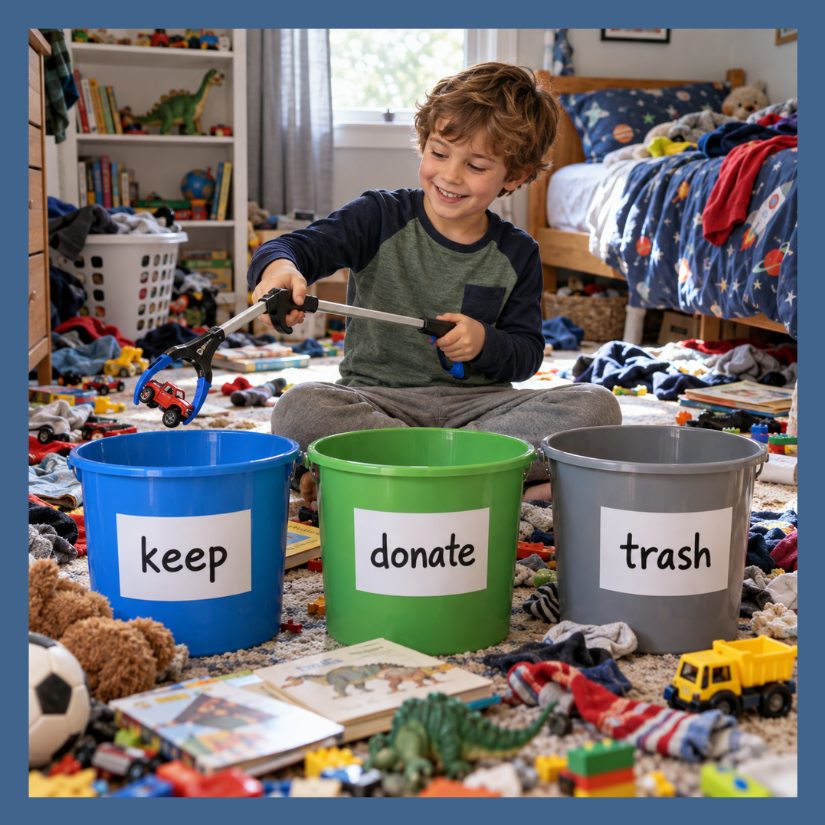
The “Three-Bin Sort” Kinetic Strategy: When tackling a massively cluttered room or backpack, never tell them to simply “organize it.” Instead, place three large plastic bins in the center of the room, labeled with clear icons: KEEP, DONATE, and TRASH. Give your child a physical grabber tool or a pair of fun gloves to make it tactile. Hand them items one by one and have them place each item into a bin within three seconds. By turning the sorting process into a fast-paced physical sorting game, you bypass the emotional attachment and processing paralysis that keeps them stuck.
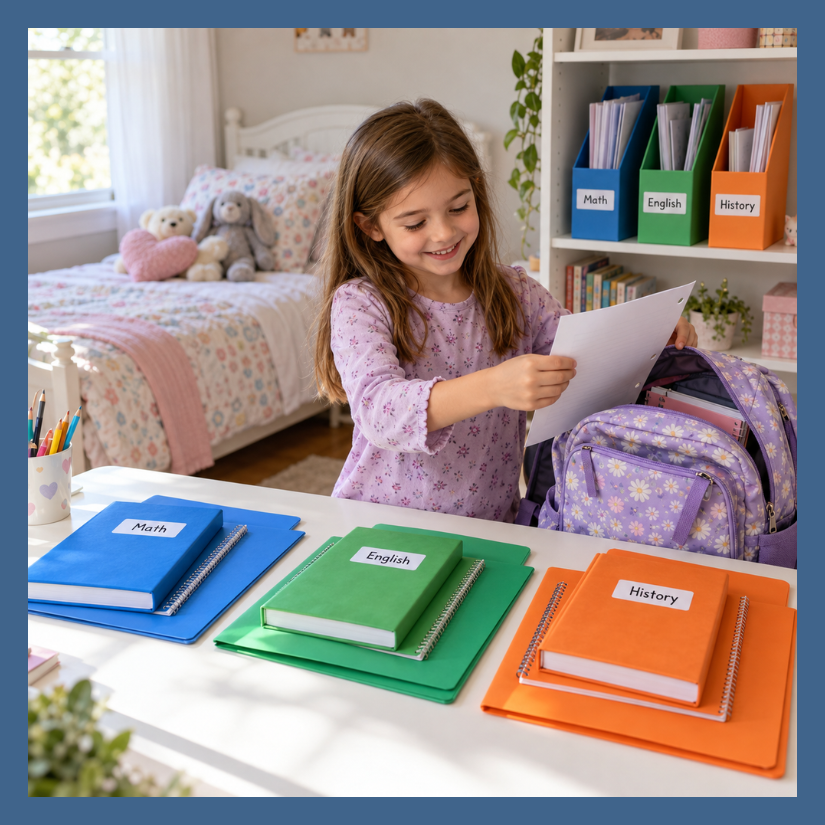
Color-Coded Subject Zoning: For school-aged kids struggling to manage homework folders and textbooks, implement strict color harmony across domains. If math is designated as the blue subject, then their math notebook, math folder, and the home storage bin for math worksheets must all be identically blue. This visual matching design eliminates the need for them to read labels or process details when putting items away under stress; their brain instantly connects the blue item to the blue zone.
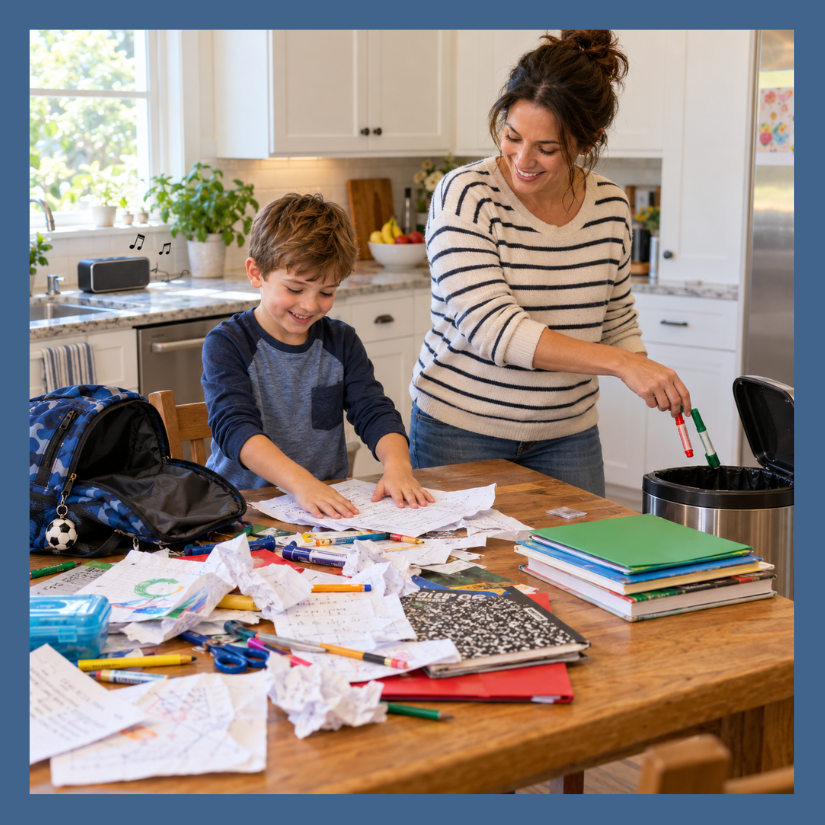
The Weekly “Backpack Purge” Ritual: Organization is a muscle that requires continuous maintenance. Establish a mandatory, 10-minute ritual every Sunday afternoon called the “Backpack Purge.” Put on an upbeat song, dump the entire contents of their backpack onto the kitchen table, and sort through it together. Do not do the work for them; act as the consultant. Ask questions like: “Does this crumple zone paper still have a home, or has its job been completed?” Regular repetition builds the neurological pathways needed to maintain order automatically.
The KidMed Bottom Line
A cluttered space reflects a cluttered mind, but a highly ordered environment acts as a soothing buffer for a developing brain. By engineering simple, highly visual spatial systems, you reduce the cognitive friction of clean-up time, teaching your child how to navigate their physical world with ease. Next Thursday, we tackle part seven: the art of time management and overcoming “time blindness!”