
The Daily Battleground
You say: “Please brush your teeth, grab your library book, and put your dirty pajamas in the laundry hamper.”
Their brain hears: “Please brush your teeth and… look, the cat is stretching! Let’s follow the cat.”
By the time you walk down the hallway, your little hero is playing a magnificent imaginary trumpet solo with a cardboard paper towel roll, while their dirty pajamas remain draped over the kitchen island. As a parent, it is incredibly easy to assume they are blowing you off. But from a clinical perspective, their internal working memory simply ran out of operational RAM. Working memory is the mental scratchpad your child uses to hold onto information temporarily while actively performing a task. The glitch? Your child’s mental scratchpad is currently written in rapidly disappearing ink.
What the Science Says
Developmental researchers at the Child Mind Institute have mapped out the capacity limits of the juvenile brain, and the numbers are eye-opening. A typical four-year-old can generally hold only one or two pieces of information in their active consciousness at a single time. By age seven, that capacity increases to about three items.
However, if your child is slightly tired, fighting off a school cold, running on a sugar drop, or simply excited about an upcoming playdate, that operational capacity drops significantly. According to cognitive studies supported by the American Psychological Association (APA), overloading a child’s working memory capacity triggers an immediate cortisol spike. When the brain senses it cannot process the load, it defaults to a freeze response—which manifests outwardly as day-dreaming, stalling, or outright ignoring your directives.
The Deep-Dive Strategies You Won’t Find Elsewhere
To make your child’s mental sticky notes permanent, we need to move past traditional verbal nagging and tap into spatial and sensory engineering:

The “Three-Second Echo” Technique: Never deliver an instruction while looking at the back of your child’s head or yelling across the kitchen island. Walk over, gently place a hand on their shoulder, drop to eye level, and state the requirement clearly. Then, have your child repeat the instruction back to you three times in an active whisper. Neuroscientists refer to this as the phonological loop. Physically speaking the words aloud forces the auditory cortex to lock the data into the short-term storage vault before distractions can swipe it away.
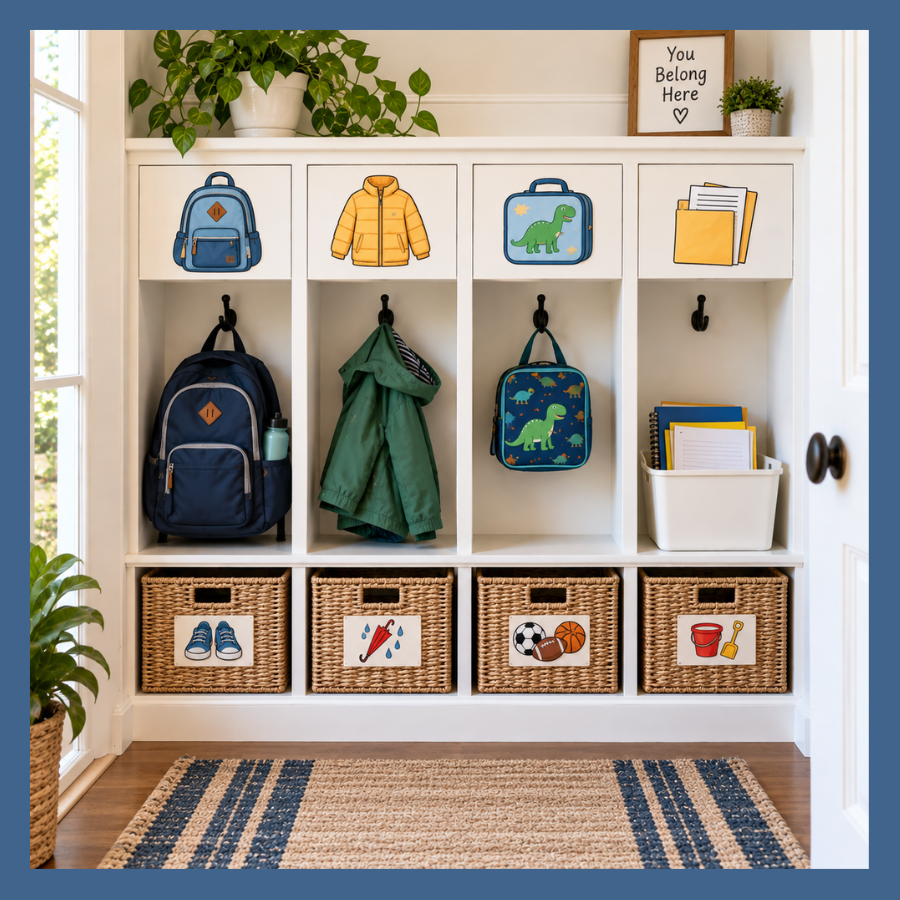
Spatial Scaffolding & Anchor Spots: Stop using abstract verbal reminders for school items. Instead, establish a physical “Launch Pad” right by the front door. This isn’t just a mudroom hook; it is a highly specific, visually outlined space (use colored painter’s tape on the floor if necessary) where their backpack, shoes, and water bottle must physically sit together. The human brain processes spatial configurations much faster than abstract sequences; if the Launch Pad looks visually asymmetrical, your child’s brain will instantly flag that something is missing.
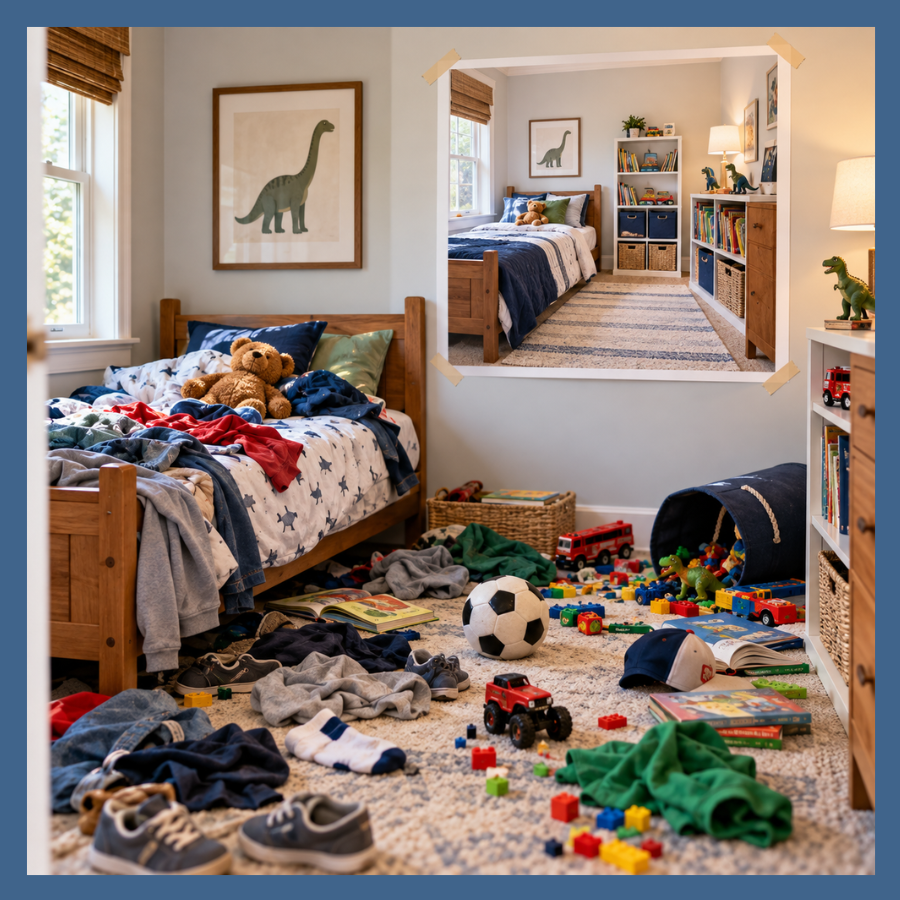
The Daily Photo Manifesto: For kids who consistently struggle with morning routines or bedroom cleaning, drop the written checklist entirely. Take a photo of your child perfectly ready for school, or a photo of their toy shelf perfectly clean. Print it out and tape it to their wall. When you tell them to get ready or clean up, don’t give instructions. Simply say, “Make your room match the photo masterpiece.”This eliminates linguistic processing entirely, allowing their visual cortex to do the heavy lifting.
The KidMed Bottom Line
Your child’s brain isn’t broken; it just has a smaller hard drive than yours. By reducing the number of verbal commands you issue and replacing them with sensory anchors, you clear the digital clutter from their mind, allowing them to cross the finish line successfully. Next week, we are tackling the emotional side of executive function: how to manage those legendary Category 5 meltdowns with true neurochemical precision!