
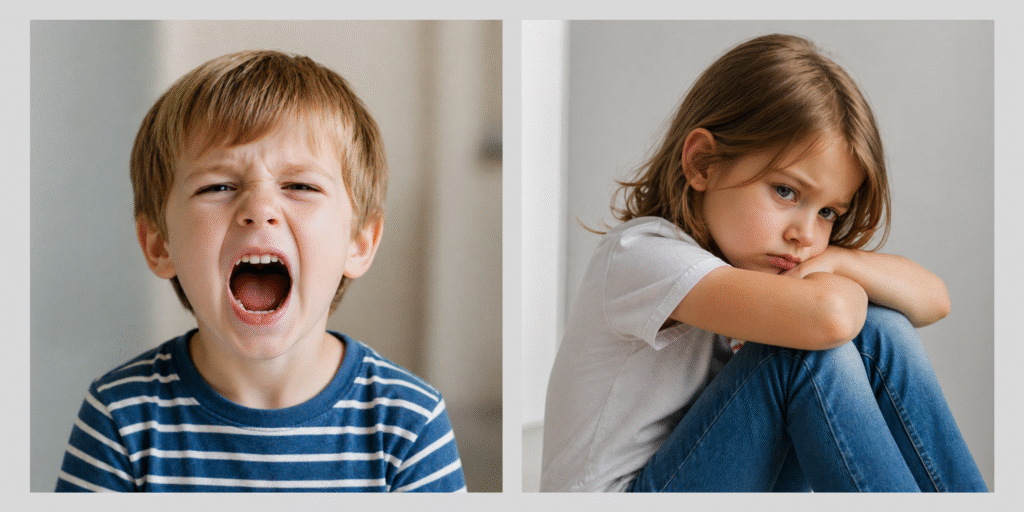
If you have ever watched your child completely unravel over the wrong color cup, you are not alone.
Kids have big feelings. Really big feelings.
One minute they are laughing, the next minute they are on the floor like their entire world has ended because you cut their sandwich “the wrong way.”
So here is the question we hear all the time at KidMed:
“Is this normal… or is this something we should be worried about?”
Let’s talk about it.
First, the truth: Big feelings are part of growing up
Children are not born knowing how to regulate emotions.
In fact, their brains are still learning how to feel and manage those feelings at the same time—which is a tough combo.
According to the American Academy of Pediatrics, emotional outbursts, mood swings, and difficulty managing frustration are a normal part of development, especially in younger children.
Why? Because the part of the brain responsible for emotional regulation (the prefrontal cortex) is still developing well into the teen years.
Translation:
👉 Your child is not trying to be dramatic.
👉 Their brain is still under construction.
So… when is it not just a phase?
Here is where it gets a little trickier.
While big feelings are normal, how often, how intense, and how long they last can give us important clues.
You may want to take a closer look if your child’s emotions are:
🚩 Happening most days and not improving over time
🚩 Intense enough to disrupt school, friendships, or home life
🚩 Lasting longer than expected for their age
🚩 Turning into constant worry, sadness, or withdrawal
🚩 Leading to aggression or behaviors that feel out of control
The Centers for Disease Control and Prevention notes that persistent changes in behavior, mood, or functioning can be early signs of anxiety, depression, or other mental health concerns in children.
In other words—
It is not just about having big feelings.
It is about whether those feelings are taking over.
What this can look like (in real life)
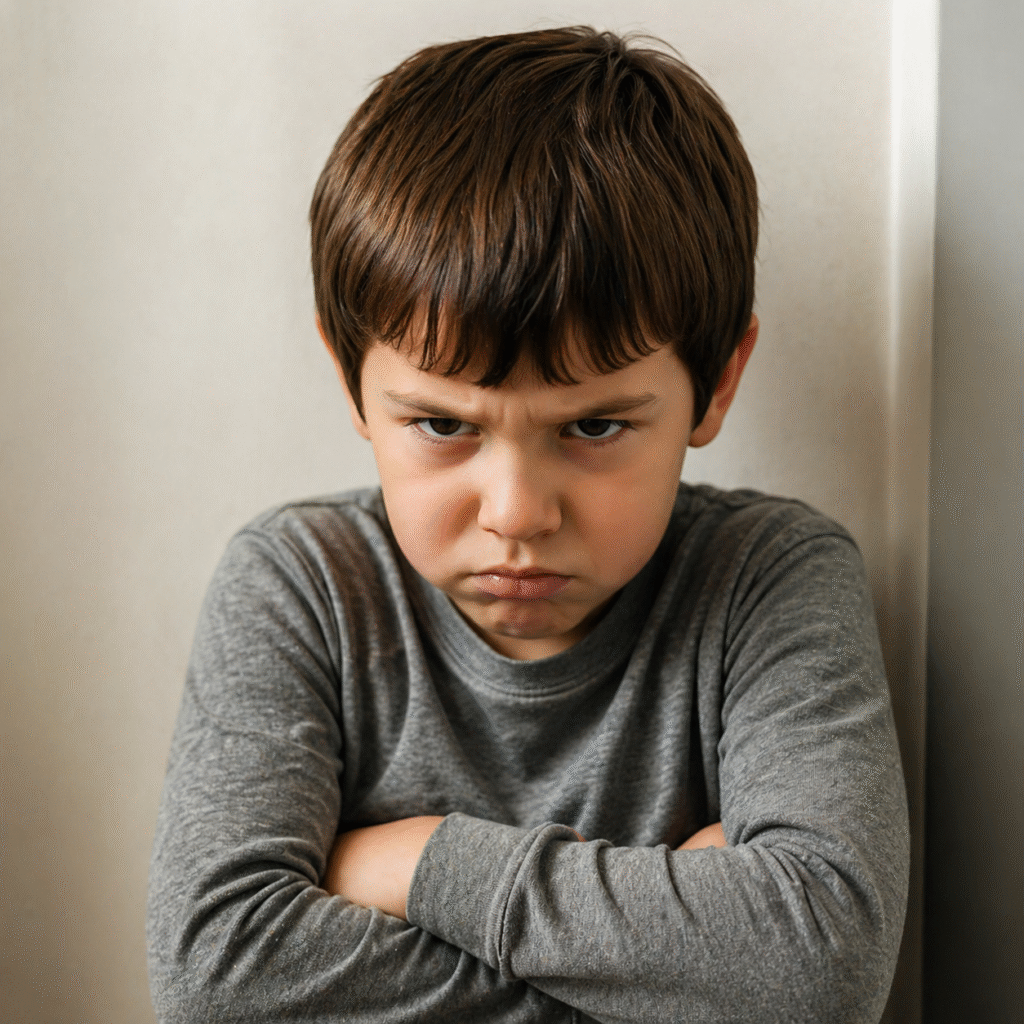
Sometimes it is obvious.
Sometimes it is not.
It might look like:
• A child who used to love school suddenly refusing to go
• Trouble sleeping… or sleeping all the time
• Constant stomachaches or headaches with no clear cause
• Big reactions to small situations every single day
• A normally social child starting to withdraw
According to the National Institute of Mental Health, children often show emotional distress through physical symptoms or behavior changes rather than words.
Because let’s be honest—most kids are not sitting down saying,
“Hi, I am experiencing anxiety and would like to discuss coping strategies.”
The part parents need to hear
This is the big one.
You know your child better than anyone.
If something feels off, it is worth paying attention to.
Not in a panic way.
Not in a “Google everything at 2am” way.
But in a “let’s take a closer look” way.
Research consistently shows that early support leads to better outcomes for children with emotional and behavioral concerns (American Psychological Association).
Which means asking questions early is not overreacting—
👉 it is being proactive.
So what should you do?
You do not need to have all the answers.
That is our job.
At KidMed, we start simple:
✔️ We listen
✔️ We ask the right questions
✔️ We look at the whole picture (sleep, school, behavior, stressors)
✔️ We help you decide what—if anything—needs to happen next
Sometimes the answer is:
👉 “This is normal. Here are some strategies.”
And sometimes the answer is:
👉 “Let’s support this a little more closely.”
Either way—you are not figuring it out alone.
The bottom line
Kids do have big feelings.
That is part of growing up.
But when those feelings start to interfere with their daily life—or yours—it is okay to pause and ask,“Is there something more going on?”
And if you are wondering…
That is reason enough to have a conversation.
💙 KidMed is here. For kids. For parents. For families.