If you are a parent in 2026, chances are you have heard the word microbiome approximately 14,000 times this month.
It is everywhere.
Instagram moms are talking about it. Health podcasts are talking about it. Someone on TikTok is blaming their child’s refusal to eat vegetables on “gut imbalance.” And somewhere, at this very moment, a wellness influencer is probably selling a $74 probiotic gummy shaped like a bear.
Meanwhile, you are just trying to keep your toddler from licking the grocery cart.
Good news: you do not need a PhD in gut bacteria to support your child’s health.
Let’s talk about what the microbiome actually is, why scientists are suddenly obsessed with it, and what parents can realistically do to support it — without turning family dinner into a fermented cabbage experience.
So…what is the microbiome?
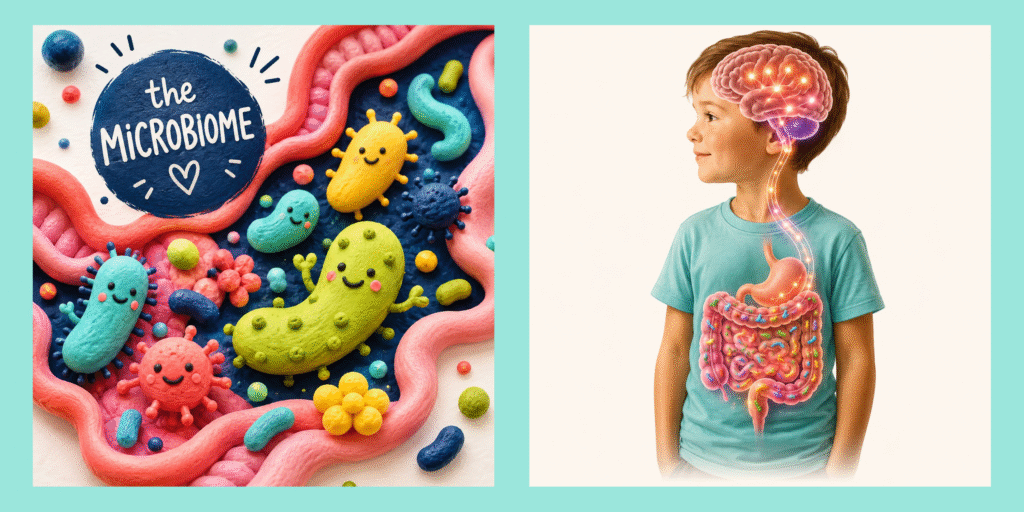
Think of the microbiome as your child’s tiny internal ecosystem.
Trillions of microorganisms — mostly bacteria, but also fungi and viruses — live inside the body, especially in the gut. While the word “bacteria” tends to make parents immediately picture hand sanitizer commercials, many of these microorganisms are actually helpful.
In an article titled The Infant Gut Microbiome and Childhood Health, researchers writing for the National Institutes of Health explained that the microbiome helps with digestion, immune system development, inflammation control, metabolism, and even communication between the gut and brain.
Translation?
Your child is basically a walking science experiment held together by chicken nuggets and microscopic organisms.
Why is everyone suddenly talking about it?
Because scientists are learning that the microbiome may influence far more than we once thought.
In a review published in Frontiers in Nutrition, researchers discussed growing evidence connecting the microbiome to allergies, eczema, asthma, obesity, autoimmune disease, and even mood and behavior.
Now before everyone throws out their pantry and starts making homemade kefir in the bathtub, let us be clear: Researchers are not saying gut bacteria control every aspect of human existence. But they are saying the microbiome appears to play a major role in overall health — especially during childhood.
And honestly, parents already suspected kids were mysterious little creatures anyway.
The microbiome starts developing early
One reason researchers are so interested in children’s microbiomes is because early childhood appears to be incredibly important for microbiome development.
In The Infant Gut Microbiome and Childhood Health, NIH researchers explained that factors like birth method, feeding choices, antibiotic exposure, environment, pets, siblings, and outdoor play may all influence the developing microbiome.
Now before every parent who had a C-section or used formula starts spiraling into guilt at 2 a.m., let us stop right here.
This is not about perfection.
Sometimes C-sections are medically necessary.
Breastfeeding is not for everyone.
Sometimes antibiotics are absolutely the right call.
Parenting is not a microbiome competition.
The goal is not to create the “perfect gut.”
The goal is supporting overall health over time.
What does dirt have to do with all of this?
Possibly more than you would think.
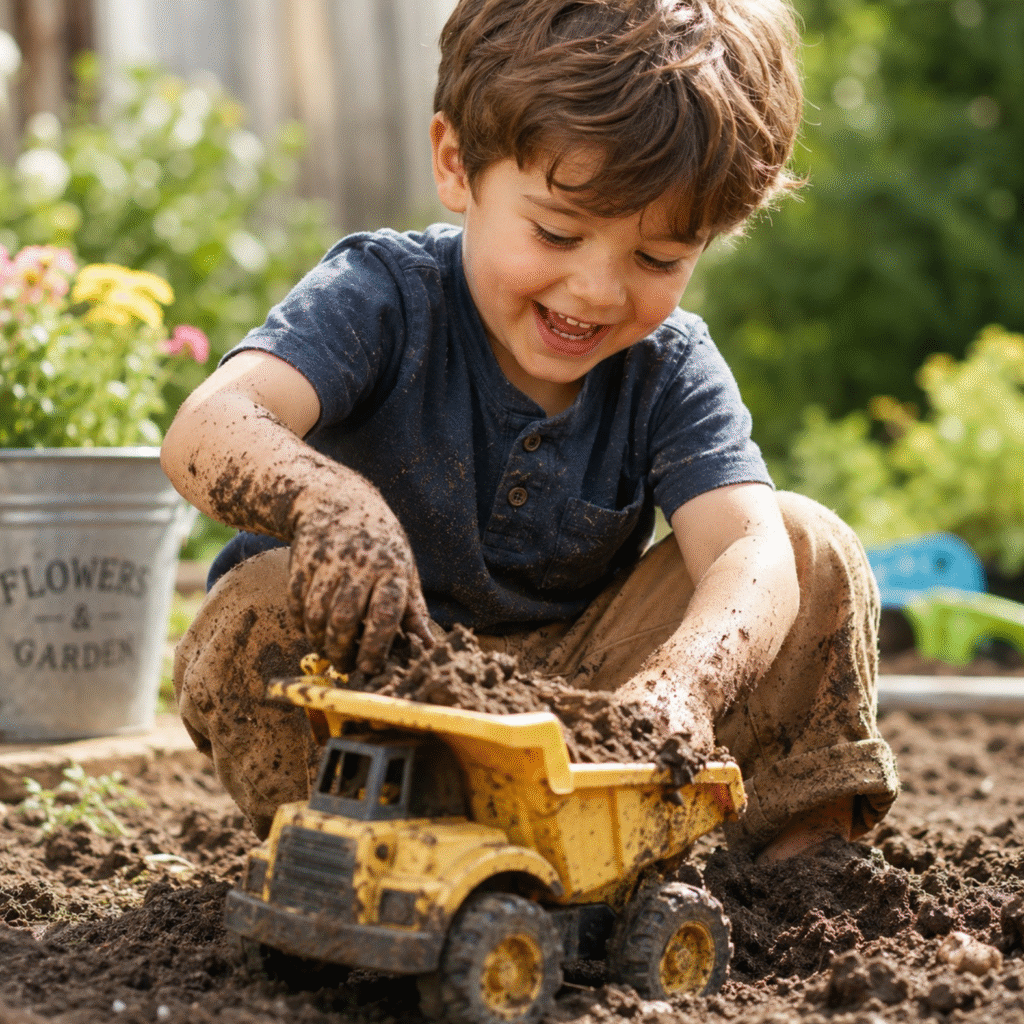
Researchers have long discussed something called the “hygiene hypothesis,” which suggests that modern children may have less exposure to diverse microorganisms than previous generations.
In articles discussing this theory, researchers have suggested that normal exposure to outdoor environments, pets, dirt, and everyday microbes may help train the immune system appropriately.
To be clear: this does not mean hygiene is bad.
Please still wash hands after using the bathroom.
Please still clean cuts.
Please still do not let your child eat French fries directly off the Target floor.
But researchers are increasingly recognizing that children were never meant to grow up in completely sterile environments.
Which is comforting news for parents whose toddlers regularly:
- lick shopping carts
- eat snacks they found between couch cushions
- attempt to pet every dog in public
- proudly hand you a rock they found “for dinner”
Honestly, some children seem determined to personally test the limits of human immunity.
Antibiotics: lifesaving, but powerful
This is where microbiome conversations become especially important.
Antibiotics save lives. Period.
But antibiotics also affect healthy bacteria along with harmful bacteria.
In a study published in Genome Medicine, researchers found that repeated antibiotic exposure during childhood may disrupt the gut microbiome and potentially influence long-term health.
Similarly, in discussions published in Nature Medicine, researchers explored how certain antibiotics may create longer-lasting microbiome changes, particularly during early childhood.
This does not mean antibiotics are bad.
It means they should be used thoughtfully.
If your child has strep throat? Antibiotics matter.
If your child has a viral cold? Antibiotics will not help.
Which is why pediatricians sometimes say, “This illness just needs time.”
Parents absolutely hate hearing that sentence because we all want to do something.
But sometimes the best medicine really is rest, fluids, and waiting out the virus while your child somehow still has enough energy to jump off furniture.
So how do you support your child’s microbiome?
Here is the good news: most microbiome-friendly habits are just healthy childhood habits.
No expensive detox tea required.
No “gut reset.”
No refrigerator shelf devoted entirely to mysterious wellness beverages.
🍽️ Feed the good bacteria
Healthy gut bacteria love fiber-rich foods.

In research published in Current Developments in Nutrition, scientists explained that fiber helps nourish beneficial gut bacteria. Researchers often call these foods “prebiotics” because they essentially feed healthy microbes.
Foods that support gut health include:
🥜 nuts and seeds
🍉 fruits
🥦 vegetables
🫘 beans
🥣 oats
🌾 whole grains
Now, if your child currently survives on beige foods and spite, do not panic.
Many children treat green vegetables like personal enemies.
The goal is exposure and variety over time — not raising a toddler who willingly requests quinoa.
🌳 Let kids play outside
Research on environmental exposure and immune development suggests outdoor play may help increase microbial diversity.
Translation: go outside.
Mud puddles are annoying.
Grass stains are permanent.
Someone will absolutely put a worm in their pocket.
But outdoor play benefits kids in countless ways — physically, emotionally, and potentially microbiologically too.
💊 Be thoughtful about antibiotics
Again, antibiotics are incredibly important when truly needed.
But research consistently supports avoiding unnecessary antibiotic use for viral illnesses.
That is why we sometimes recommend monitoring symptoms instead of immediately prescribing antibiotics.
And yes, we know that is frustrating when your child has been coughing directly into your soul for six straight days.
🥒 Consider fermented foods…if your child is willing
Fermented foods contain live microorganisms that may help support gut diversity.
Researchers reviewing microbiome nutrition studies have discussed possible benefits from foods like:
- yogurt
- kefir
- sauerkraut
- kimchi
- fermented pickles
Now realistically, most preschoolers are not begging for kimchi.
Some children act personally betrayed when yogurt contains fruit.
But simple foods like yogurt can be an easy place to start.
🛀 Stop trying to sterilize childhood
One of the biggest takeaways from microbiome research is that normal life matters.
Kids need:
- movement
- sleep
- outdoor play
- healthy foods
- interaction with the world around them
In multiple reviews on immune development and the microbiome, researchers emphasized that regular exposure to everyday environments may help support healthy immune system training.
Again, this is not permission to let your child drink puddle water behind the gas station.
But the occasional Cheerio discovered in the car seat?
Your child will probably survive. Possibly even thrive.
What about probiotics?
Ah yes. The billion-dollar gummy industry.
This is where the science becomes more complicated.
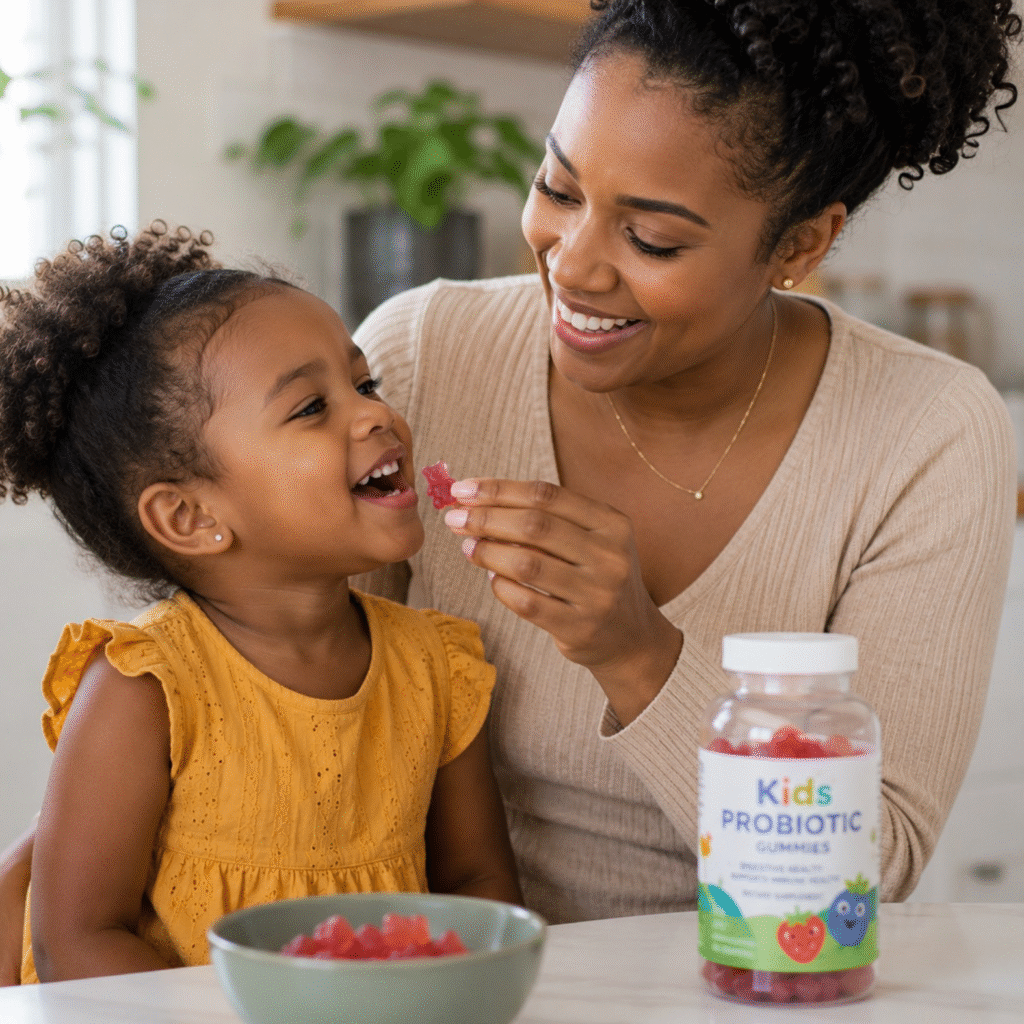
Some probiotic strains appear helpful in specific situations, especially for antibiotic-associated diarrhea. But researchers still do not fully understand which probiotics help which conditions — or which children.
In recent discussions about gut recovery after antibiotics, researchers noted that probiotic supplements do not always improve microbiome recovery and may sometimes delay the body’s natural rebuilding process.
Which is a good reminder that the microbiome is incredibly complex.
There is no magical gummy that instantly transforms children into kale-loving wellness influencers.
For most healthy kids, the basics still matter most:
- balanced nutrition
- sleep
- movement
- outdoor play
- stress reduction
- thoughtful medication use
Turns out your grandmother’s advice about “go play outside and eat something besides crackers” was not entirely wrong.
The bottom line
The microbiome matters because it reminds us that children’s bodies are deeply connected systems.
The gut talks to the immune system.
The immune system talks to the brain.
Diet affects bacteria.
Bacteria affect inflammation.
And while scientists are still learning exactly how all of this works, one thing is becoming increasingly clear:
Healthy childhoods are not built through perfection.
They are built through patterns.
More outside time.
More movement.
More real food.
More sleep.
Less pressure to create a perfectly sanitized childhood.
And maybe just a little less panic the next time your toddler eats a Goldfish cracker they found in the minivan cupholder from what appears to be the previous presidential administration.
Want to Know More?
- National Institutes of Health. The Infant Gut Microbiome and Childhood Health.
- Frontiers in Nutrition. Research on childhood microbiome development and immune health.
- Genome Medicine. Studies examining antibiotics and the pediatric microbiome.
- Nature Medicine. Research discussing antibiotics and gut microbiome recovery.
- Current Developments in Nutrition. Research on fiber, prebiotics, and healthy gut bacteria.
- Harvard Health Publishing. Articles on the gut microbiome and overall health.
- American Academy of Pediatrics. Guidance on antibiotics and healthy immune development.