
The Daily Battleground
During the blistering heat of July, keeping your child hydrated is relatively simple. They run around the backyard, turn bright red, sweat profusely, and naturally beg for ice water, popsicles, or a blast from the garden hose. But fast-forward to a chilly November afternoon, and their natural thirst drive disappears entirely. They can spend hours playing outdoors in the cool air without requesting a single sip of water.
When you hand them a water bottle, they look at you with total confusion and say, “But I’m not hot!” As a parent trying to manage their wellness, it is easy to let the hydration slide. However, from a clinical perspective, winter dehydration is a stealthy, dangerous enemy that directly weakens your child’s immune system long before they ever feel thirsty.
What the Science Says
According to sports medicine research supported by the National Institutes of Health (NIH), the human body’s natural thirst response is significantly diminished by up to 40% in cold weather. When the ambient temperature drops, our blood vessels undergo a process called peripheral vasoconstriction—they constrict to pull blood away from the limbs and concentrate it in the warm core of the body. Because the brain’s central receptors sense that the core blood volume is completely full, it fails to trigger the hormonal signals that make your child feel thirsty.
The problem? Your child is still losing massive amounts of water through respiratory evaporation. Every single time you see your child’s breath turn into a white cloud in the cold winter air, you are watching physical water vapor escape their lungs. Furthermore, the American Academy of Pediatrics (AAP) emphasizes that proper systemic hydration is the absolute lifeblood of the lymphatic system, which produces and transports white blood cells to fight off seasonal infections.
The Deep-Dive Strategies You Won’t Find Elsewhere
To bypass their diminished thirst drive and keep your little hero’s cells perfectly hydrated all winter long, we need to abandon the standard glass of cold tap water and get creative with temperature and flavor engineering:
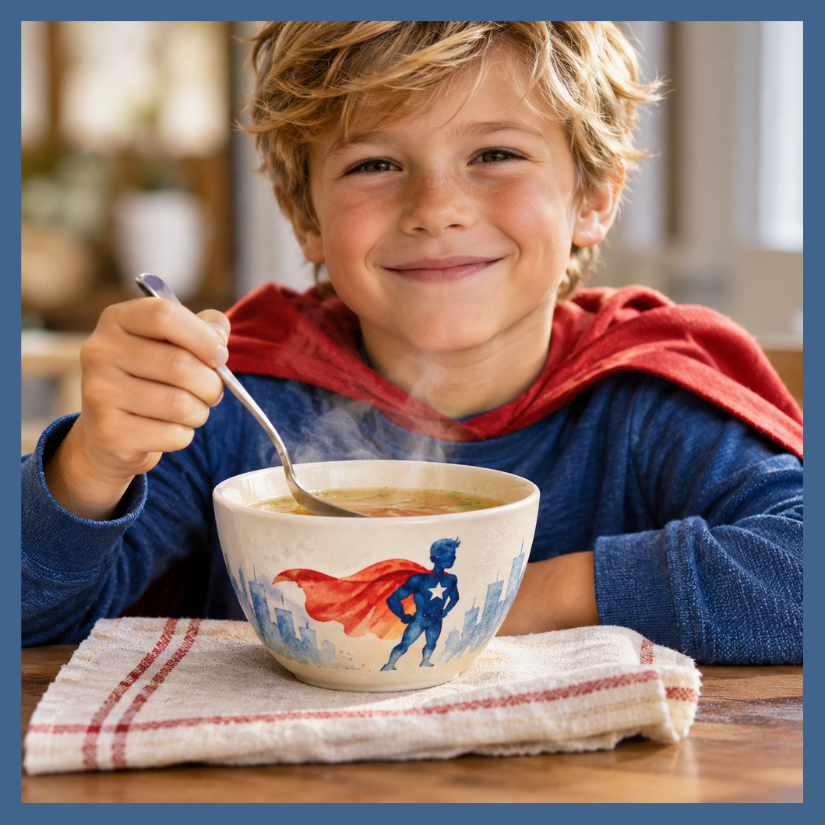
The Warm “Hero Broth” Ritual: When kids come inside from playing in the cold, their internal systems are craving warmth, not freezing cold liquids. Instead of offering juice or soda, introduce a savory “Hero Broth.” Warm up low-sodium organic bone broth or vegetable broth in a mug, add a tiny pinch of sea salt, and let them sip it through a straw. Bone broth is rich in gelatin, collagen, and amino acids (like glycine) that soothe the gut lining while delivering a massive hit of hydrating electrolytes that stabilize blood volume much faster than plain water.

The “Herbal Tea Alchemy” Game: Transform winter hydration into a fun, magical science experiment. Brew a cup of caffeine-free Hibiscus or Butterfly Pea Flower herbal tea. These teas are naturally rich in immune-supporting antioxidants. Hand your child a small slice of lemon and let them squeeze the juice directly into the mug. The citric acid will instantly change the physical color of the tea from dark blue to vibrant purple or bright pink right before their eyes! By turning a drink into a visual spectacle, you make hydration highly desirable.

The High-Hydration Food Blueprint: If your child absolutely refuses to drink liquid fluids, adapt your kitchen strategy to focus on solid food hydration. Many cold-weather fruits and vegetables possess a remarkably high water volume paired with essential vitamins. Incorporate crisp Honeycrisp apples (86% water), raw cucumbers (95% water), bell pepper strips (92% water), and juicy clementines into their afternoon snack platters. Their digestive tract processes these cellular food waters slowly, providing a steady, prolonged release of hydration to the body throughout the evening.
The KidMed Bottom Line
Do not wait for your child to tell you they are thirsty in November; their brain’s internal sensor is temporarily offline due to the cold. By offering warm, nutrient-dense broths, fun visual teas, and high-water foods, you quietly keep their internal defenses running at absolute peak performance. Join us next Thursday for Part 3, where we will help you decode that scary midnight cough: is it croup, or is it asthma?