

The Daily Battleground
You sit your child down at the kitchen table to complete a basic reading comprehension assignment. They pick up their pencil, write their name at the top of the page, and read the first sentence. Then, the refrigerator motor hums. A bird flies past the window. Someone closes a door upstairs. The dog walks across the hardwood floor.
With every single minor sensory input, your child’s focus shatters into a million pieces. They drop their pencil, lean back in their chair, and begin tracking the movement of a dust particle in the air. As a parent trying to manage an afternoon routine, this can drive you to absolute wit’s end. It feels like your child has zero attention span. But from a developmental perspective, their brain actually has the opposite problem: they have too much attention span. They are paying attention to absolutely everything at the exact same time.
What the Science Says
Selective attention—the critical executive function skill that allows a person to consciously focus on a single relevant task while actively filtering out competing background distractions—is a massive cognitive achievement. According to clinical studies published by the American Psychological Association (APA), a young child’s brain is designed to have an open sensory profile.
Evolutionarily, this hyper-awareness kept children safe from environmental hazards. In a modern academic environment, however, this open setting means the brain struggles to activate its internal gating mechanism. This gating mechanism, handled by the brain’s reticular activating system (RAS), acts as a protective filter for the prefrontal cortex. If this filter is young or undertrained, a humming refrigerator carries the exact same cognitive weight and importance as the reading homework sitting directly in front of their eyes.
The Deep-Dive Strategies You Won’t Find Elsewhere
To help your child narrow their focus field and build robust deep-work muscles, we need to abandon constant verbal corrections (“Focus!”, “Pay attention!”) and actively adjust their sensory environment:
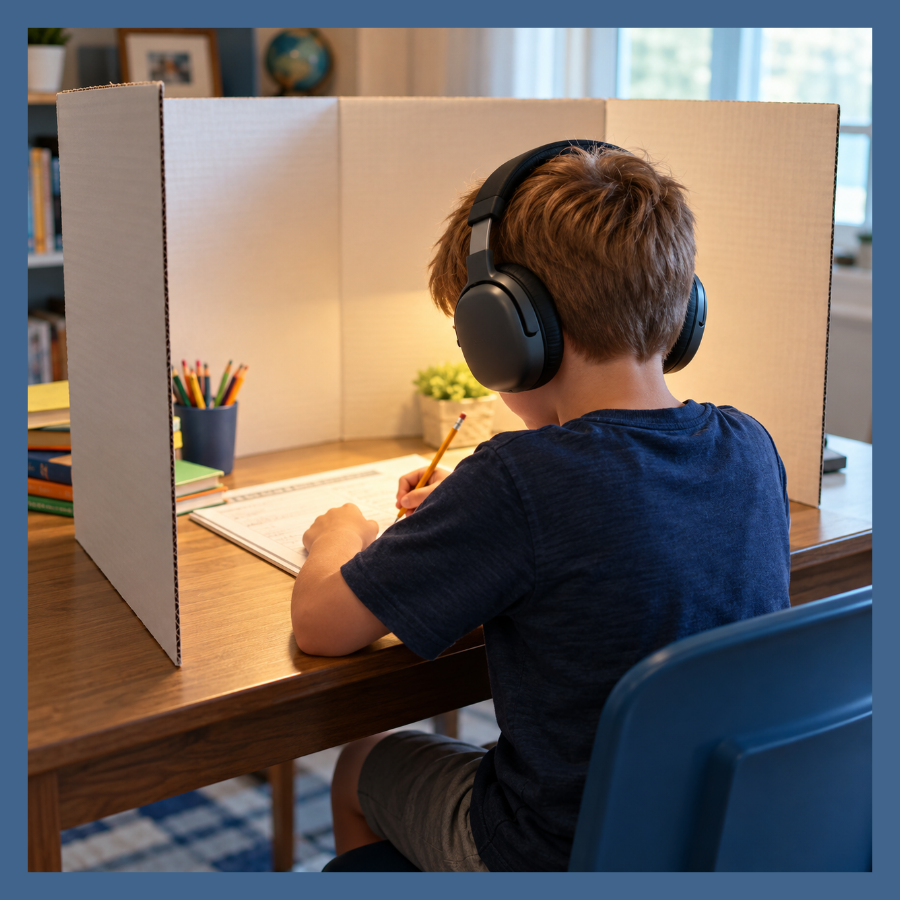
Sensory Gating Engineering (The Attention Bubble): If your child is easily distracted by noise, stop fighting it—mask it. Invest in a comfortable pair of noise-canceling headphones and play low-frequency brown noise or classical video game soundtracks (which are scientifically composed without lyrics to stimulate focus and momentum) during homework periods. Visually restrict their focus field by using a three-sided cardboard presentation tri-fold board on the table, creating a private “Study Cubby.” This simple boundary cuts off peripheral motion, letting the visual cortex settle on the work.
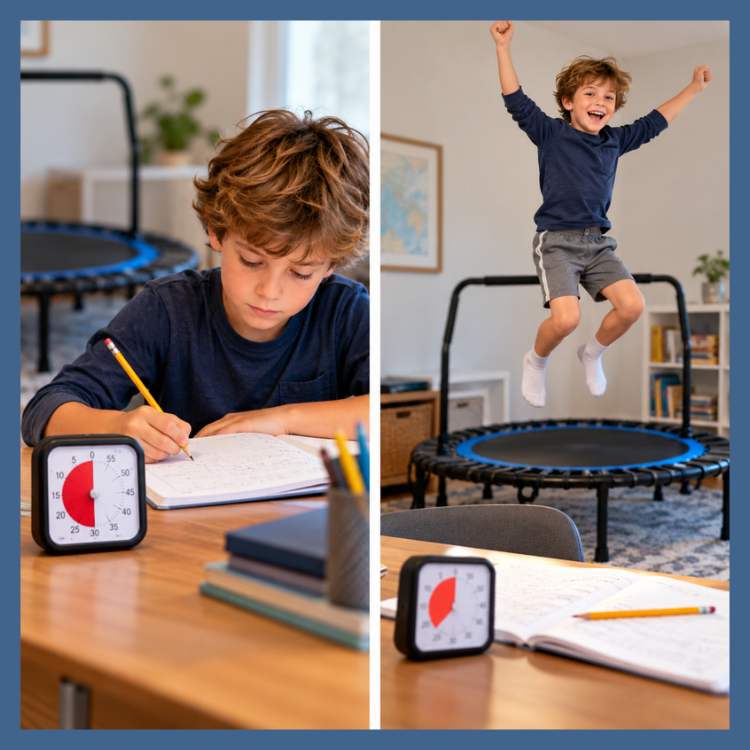
The “Focus Sprint & Brain Break” Cycle: The juvenile brain cannot maintain deep attention for long blocks of time. Pushing past their natural cognitive threshold causes the brain to enter a state of counter-productive zoning out. Implement the pediatric version of the Pomodoro Technique:
- minutes of dedicated focus sprint time.
- For ages 9–12: Set it for 15–20 minutes.
Once the timer rings, provide a mandatory, 2-minute “Active Brain Break”—have them jump on a mini-trampoline, do ten jumping jacks, or shake out their limbs. Physical movement triggers a fresh wave of oxygenated blood and dopamine to the prefrontal cortex, fully resetting their focus battery for the next sprint round.

The “Doodle Notepad” Strategy for Active Listening: If your child constantly fidgets, spins their pencil, or twists in their chair while you are explaining directions, their motor cortex is simply under-stimulated. Instead of demanding that they sit completely still, hand them a designated “Doodle Notepad.” Allow them to draw abstract shapes or squeeze a sensory stress ball while listening to your instructions. Studies show that providing a controlled, low-stakes outlet for physical restlessness actually satisfies the brain’s motor drive, allowing the auditory cortex to focus more deeply on your spoken words.
The KidMed Masterclass Conclusion
Building robust executive function skills is a slow, beautiful marathon, not a frantic sprint. Every single time you break a big task into micro-steps, use a visual countdown timer, or project absolute calm during a massive meltdown, you are physically wiring the neural networks that will guide your child into a successful, independent adulthood. Thank you for partnering with the KidMed team throughout this masterclass series—you are the true hero of your family’s journey, and we are always incredibly honored to serve as your clinical guide!