

The Daily Battleground
If your child treats the simple command to clear their dinner plate or start their spelling homework like a grueling, forced march across the freezing plains of Antarctica, you are dealing with a breakdown in task initiation. This is the crucial executive function skill that allows a person to look at a project or a chore, evaluate the demands, and physically get started without stalling, procrastinating, crying, or suddenly claiming they need an urgent snack.
As parents, it is incredibly easy to label this behavior as laziness or avoidance. But to a developing brain, a large, unstructured task looks like an overwhelming, insurmountable mountain of cognitive chaos. They literally do not know where to physically place their hands first, so their processing system stalls out entirely to prevent failure.
What the Science Says

The American Academy of Child and Adolescent Psychiatry (AACAP) notes that executive function challenges make the concept of time highly abstract and difficult for children to grasp. While an adult conceptualizes “twenty minutes of cleanup time” as a brief, manageable interval, a child views it as an endless, ambiguous sentence of manual labor.
Furthermore, neurological research shows that starting an undesirable task requires a significant expenditure of activation energy in the brain. If the child’s brain hasn’t yet developed the robust dopamine pathways required to anticipate a long-term reward (like a clean room or good grades), the prefrontal cortex struggles to fire the motor commands needed to begin the movement.
The Deep-Dive Strategies You Won’t Find Elsewhere 🍪
To celebrate National Homemade Cookies Day today, we are going to look at how we can use the exact sensory mechanics of baking to cure the procrastination bug across all areas of your child’s life:

The Micro-Step Breakdown Trick: Stop telling your child to “Clean your room” or “Get ready for bed.”These are macro-commands that trigger execution paralysis. Instead, break the assignment down into ridiculous micro-goals that take less than 60 seconds to achieve. Say: “Pick up three red things from the rug and put them in the bin. That’s it.” Once those three items are moved, the brain releases a small, natural hit of dopamine. This chemical reward lowers the activation energy barrier, making it significantly easier for them to initiate the next micro-step.
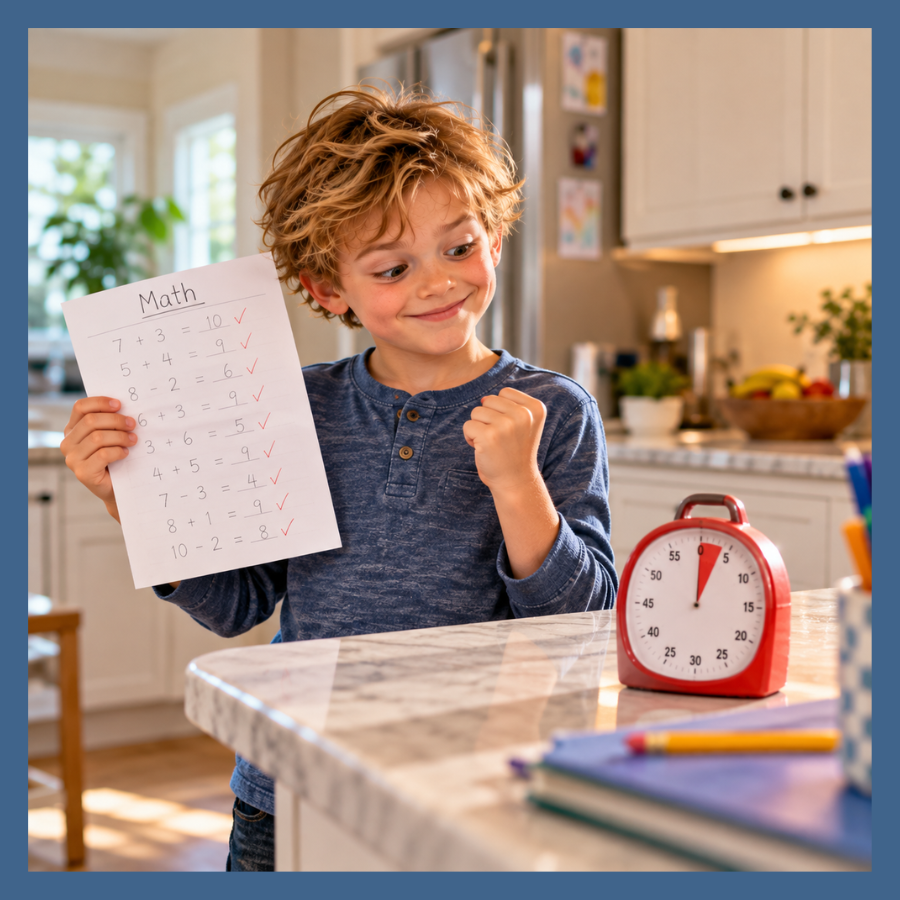
The “Five-Minute Dash” Contract: When homework avoidance strikes, negotiate a tiny, non-threatening time contract. Set a highly visible kitchen egg timer for exactly five minutes. Tell your child: “You only have to work on this math worksheet until the timer rings. Once it dings, you have official permission to stop completely if you want to.” 90% of the time, once the child pushes through the initial five-minute friction barrier and builds minor momentum, their brain normalizes the task, and they will choose to keep working until it’s finished.

The Immediate Kinetic Reward Hack: Pair task initiation with an immediate, enjoyable sensory experience. Since baking requires strict sequence following, use it as a training playground! Say: “Let’s see how fast we can measure out the flour before the kitchen music track ends!” In the home environment, allow them to listen to a highly specific, upbeat audio track only while performing their daily chores. This audio pairing primes the motor cortex for immediate action.
The KidMed Bottom Line
Procrastination is rarely a reflection of your child’s work ethic; it is a manifestation of emotional and structural overwhelm. By shrinking the entry point of the task until it feels impossible to fail, you help them build the vital neural momentum necessary to tackle life’s big projects with confidence. Join us next week for part six, where we will unlock the secrets of physical and environmental organization!