

It’s about that time. Every Sunday night in August, parents across Carteret and Onslow counties stand in their kitchens with a vision. You picture yourself packing a beautiful, wholesome lunch that will fuel your child’s brain, keep their energy steady, and earn you a mental gold star from the teacher.
Then, you walk down the grocery store snack aisle.
Suddenly, you are surrounded by an overwhelming sea of bright packaging, cartoon characters, and flashing health claims like “Made with Real Fruit!” or “Excellent Source of Vitamin C!” You toss the convenient pouches, bars, and juice boxes into your cart, thinking you’ve nailed it.
Instead, without realizing it, you might be packing a ticking behavioral time bomb. By 10:00 AM, your child is riding a massive chemical and blood sugar spike, followed by a violent crash right in the middle of reading group. The teacher is dealing with a spacey, hyperactive, or deeply emotional student, and you’re left wondering why they came home with an untouched lunchbox and a terrible attitude.
You want to give your child the biological building blocks for focus and emotional regulation. But major food corporations make it incredibly hard to separate real nutrition from clever marketing.
Here is the unvarnished, research-backed truth on how to spot the hidden lunchbox saboteurs and pack a lunch that genuinely supports your child’s brain.
1. The Red 40 Reality: Artificial Dyes and the Classroom Crash
Many parents don’t realize that the bright red fruit snacks, blue sports drinks, and neon-orange crackers are doing much more than turning their kid’s tongue a funny color. They are actively disrupting neurological function.
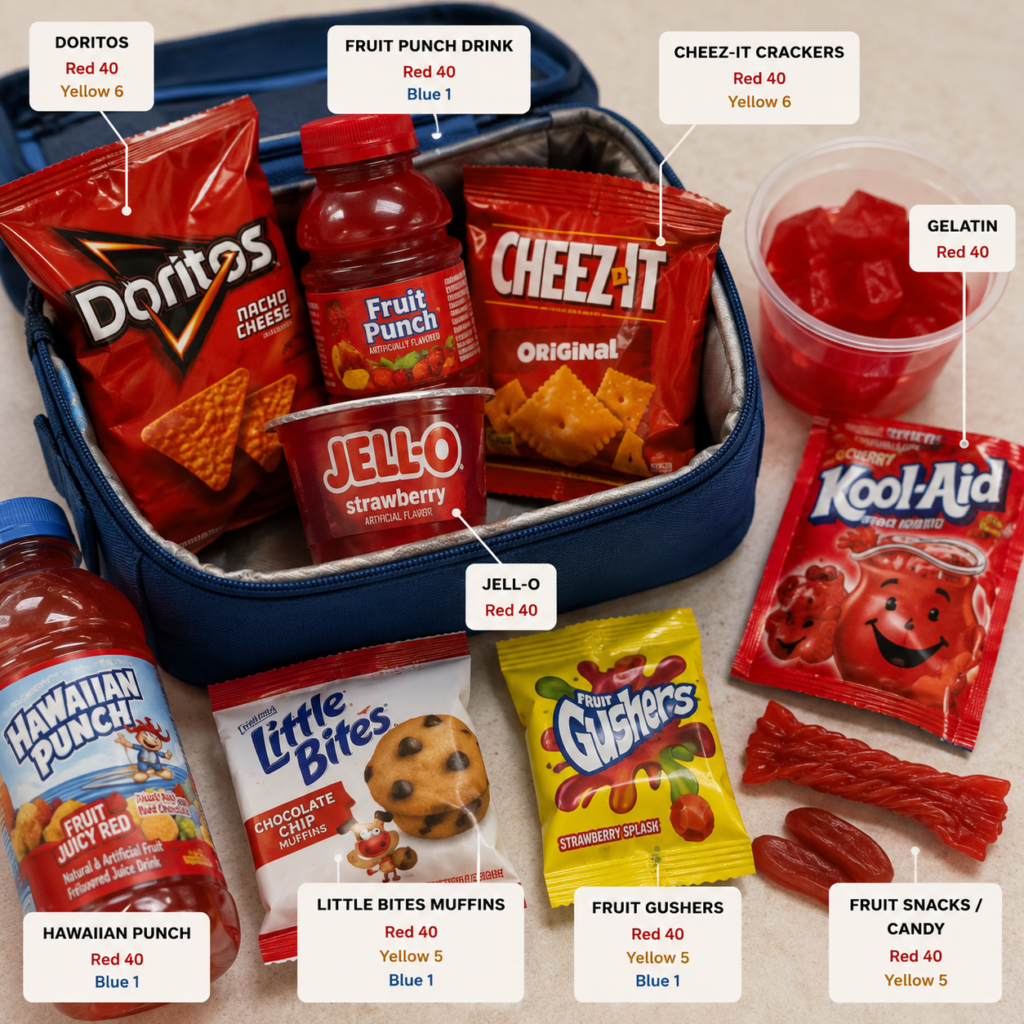
- The Guide’s Authority: While US food regulations lag behind, clinical studies frequently evaluated by the American Academy of Pediatrics show a distinct, undeniable link between artificial food dyes (like Red 40, Yellow 5, and Blue 1) and increased hyperactivity, impulsivity, and attention issues in children—even those without an ADHD diagnosis.
- The Biological Hook: These synthetic dyes are literally derived from petroleum. They can cross the blood-brain barrier and trigger a neurochemical cascade that mimics a mild allergic reaction in the brain. If your child seems completely unable to sit still or focus on Tuesday mornings, look at the ingredients list of their Monday snacks.
2. De-coding the “Healthy” Marketing Illusion
Don’t trust the front of the box. The front of the box is an advertisement; the back of the box is the truth.
- The Fruit Snack Trap: Standard “fruit snacks” or “fruit roll-ups” are structurally identical to gummy bears. They are made of corn syrup, refined sugar, and modified corn starch, sprayed with a tiny drop of apple juice concentrate to legally justify the word “fruit.”
- The Juice Box Deception: A single standard school juice box can pack up to 22 grams of sugar. To put that in perspective, our friends over at the American Academy of Pediatrics recommend that children consume less than 25 grams of added sugar in an entire day. Sending a juice box and a sweet granola bar to school means your child has exceeded their daily biological sugar limit before the morning recess bell even rings.
3. The Formula for Steady Brain Power
We don’t expect you to bake organic sourdough crackers from scratch at midnight. Winning the lunchbox game is simply about understanding blood sugar mechanics. When a child eats pure carbohydrates (chips, crackers, juice), their blood sugar spikes and crashes. But when you anchor those carbs with healthy fats and proteins, you slow down digestion and create steady, long-lasting mental focus.
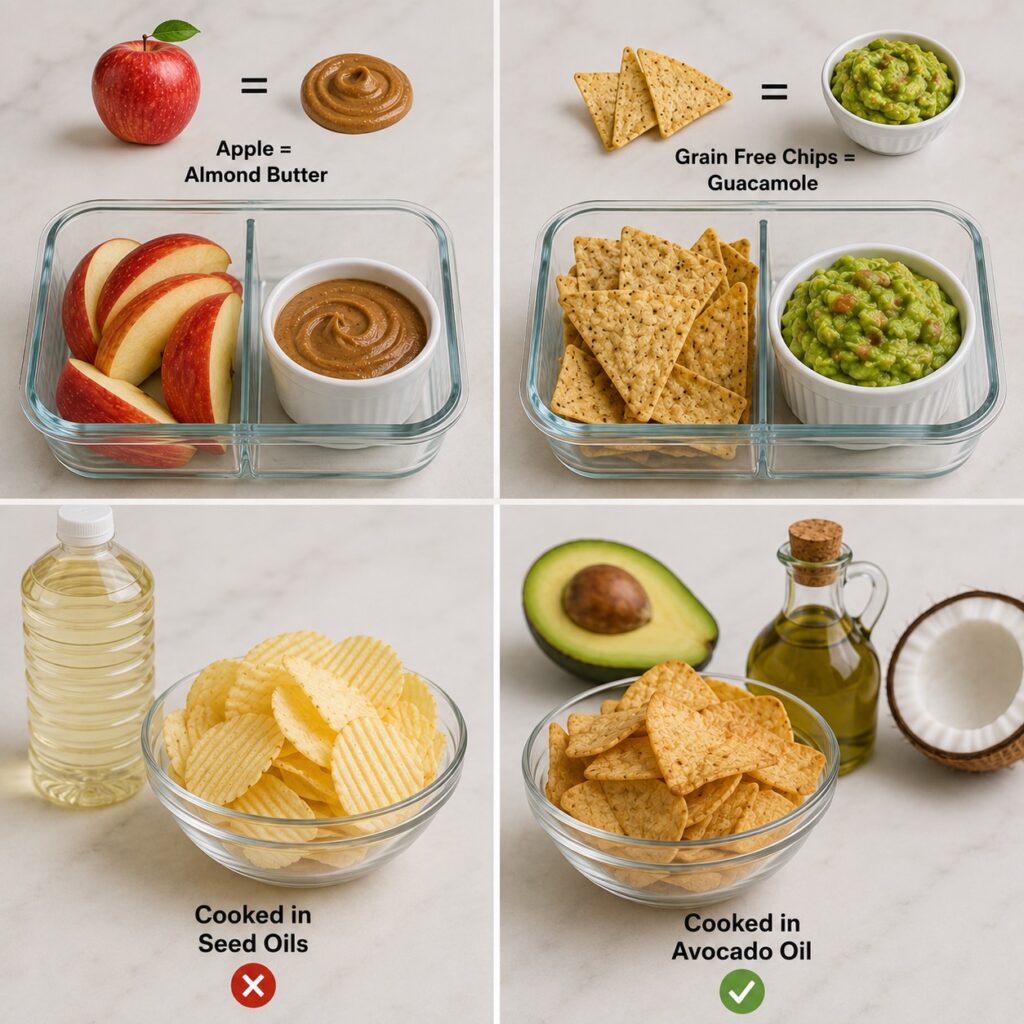
- The Protein Anchor: Always pair a carbohydrate with a stabilizer. If you pack an apple, add a packet of almond butter. If you pack grain-free tortilla chips, add a side of guacamole or a hard-boiled egg.
- The Cellular Fuel: The brain is made of roughly 60% fat. It literally runs on lipids. Swapping out highly processed seed oils (like canola or soybean oil found in standard potato chips) for snacks cooked in avocado oil or coconut oil gives their brain cells the clean fuel they need to process complex information.
Your Smart Lunchbox Upgrade Checklist
Let’s clean out the pantry and upgrade their fuel supply this week:
- The “Dye-Free” Audit: Flip over your snack wrappers. If you see a color followed by a number (like Red 40 or Yellow 6), toss it. Swap them for brands that use organic fruit juice, beets, or turmeric for color.
- The Whole-Fruit Switch: Completely eliminate the liquid sugar rush. Swap the juice box for a stainless steel water bottle filled with filtered water and a few slices of real strawberries or lemon. Pack the actual orange instead of the orange juice pouch so they get the necessary fiber.
- The Label Rule: When buying packaged snacks, aim for options with five ingredients or fewer, made from real, recognizable whole foods that your grandmother would recognize.
By treating food as cellular fuel rather than just a convenience item, you are giving your child a massive academic advantage. You’re not just packing a lunch; you are setting their nervous system up for a peaceful, focused, and successful day. Pack on friends! 🍱 🩷